
Madonna writes autofiction
Confessions II, what I read in June, and meeting Nene Leakes

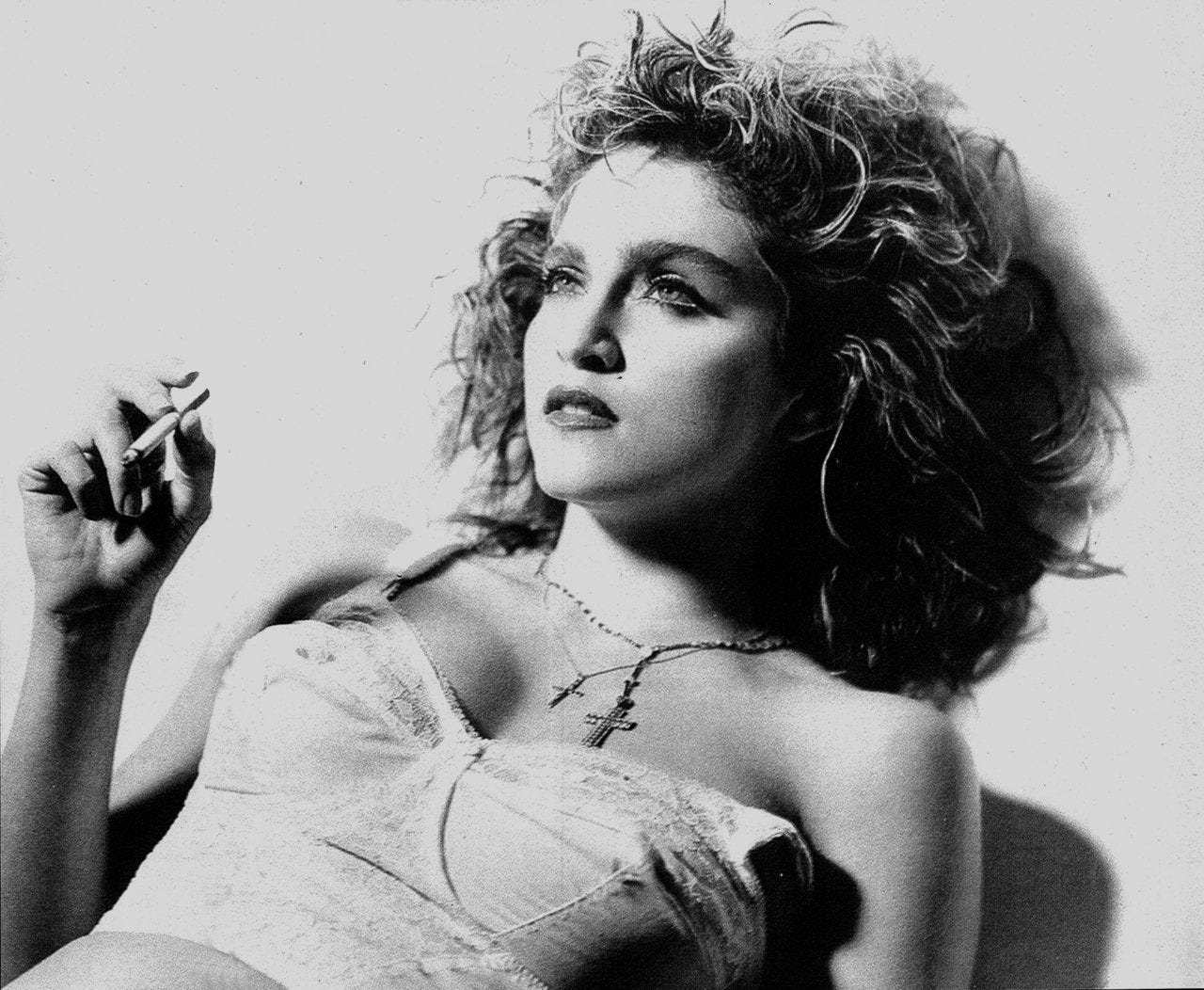
“Bitches love a summer. Bitches love summer.” This mantra was recently introduced to the pop culture lexicon by The Real Housewives of Rhode Island’s Alicia Carmody. And you know what? I’m bitches. And so is Madonna. It’s a Madonna summer.
I’ve gone on the record declaring this a Madonna summer as early as Coachella weekend 2, when the Queen of Pop made a surprise appearance during Sabrina Carpenter’s set. Witnessing that in person sent me down a Madonna wormhole, and I haven’t stopped playing her music since. In anticipation of her latest album, Confessions II, released last Friday, I’m sure many fans began listening to the original 2005 masterpiece, Confessions on a Dance Floor. Not me. According to my Apple Music Replay, Madonna has been my top artist for the past three months. In April, my top album was Hard Candy. In May, Bedtime Stories knocked Hard Candy to second place.
I have always been a Hard Candy defender. Upon its release, it was slammed by multiple critics and fans. Madonna, usually a pioneer in pop music, was accused of chasing trends and radio-friendly hits by teaming up with The Neptunes, Timbaland, and Kanye West. For Pitchfork, Tom Ewing rated the album a 5.3 and wrote: “Her strengths have always been her authority, and her smart sense of who to work with and when. So even if it’s a summary of where pop’s at rather than where it’s going, Hard Candy should still be excellent. After all, if you’re not going to do your best work for Madonna, who are you going to do it for? But after listening, the question’s still open-- nobody involved in Hard Candy is anywhere near their creative peak.” He also calls my favorite track on the album, “Heartbeat,” the worst of the bunch and a retread of “Into the Groove.” But here’s the thing about pop music. The real arbiter of taste is the dance floor, and Madonna’s link-up with the hottest club music producers of the time has endured. It’s not uncommon to hear a Hard Candy track on a New York dance floor, at a party in Fire Island, or at some gay’s afters in Brooklyn.
At the time, what came across as a retread in a flooded sea of pop music also produced by The Neptunes, Timbaland, and Kanye West has endured. Because she’s fucking Madonna. And who even remembers the other songs she was accused of trying to compete with? At least one critic at the time got it exactly right. For Rolling Stone, Caryn Ganz wrote: “Hard Candy celebrates dance as salvation, but even the euphorically groovy ‘Heartbeat’ and ‘Dance2night’ strike wistful notes.”
Maybe that’s why I’ve always responded to Hard Candy. I’ve always found salvation on the dance floor, along with community. Last year, for Harper’s Bazaar, I wrote about my introduction to rave culture and how it gave me the confidence to love my own body: “MDMA warms up your body. If I didn’t want to die of heat exhaustion, I’d have to do the same. I lifted my own vintage Janet Jackson tour shirt over my head, exposing my body on the dance floor. And the record didn’t scratch. The party didn’t stop. I wasn’t kicked out for not possessing a body that looked like the sea of muscled gay men surrounding me. It would be so much easier to disassociate from the world rather than make the conscious decision to live in your body, embrace every part of it, and connect with your friends and strangers. But the best part about dancing: It’s fun as hell.” When Madonna sings, “Don’t you know? Can’t you see? When I dance, I feel free” on “Heartbeat”? That’s so fucking real.
Madonna hasn’t only looked for salvation in dance: she’s also a bit of a hopeless romantic! My favorite Madonna album is Bedtime Stories, her mid-’90s foray into slinky electronic, trip hop, and R&B. The album also features my favorite Madonna song: “Love Tried to Welcome Me.” When she sings “loneliness has never been a stranger to me,” all of the unrequited loves of my life flash before my eyes. And “ love tried to welcome me, but my soul drew back” speaks exactly to moments when I’ve been unable to accept love into life, instead listening to an inner saboteur. But goddamn it if she’s not gonna love herself despite it all. I’ve never found any Madonna as inspiring as “Survival,” where she sings “I’ll never be an angel. I’ll never be a saint; it’s true. I’m too busy surviving. Whether it’s heaven or hell. I’m gonna be living to tell.”
Madonna has always been revered for her culture-defining singles. When she first dropped “I Feel So Free,” followed by “Bring Love” and “Love Sensation” from Confessions II, a common refrain online was “Where are the singles?” An odd expectation for an artist in this modern era where streaming is shit. I recall the same complaint lobbied at Beyoncé when she released “Break My Soul,” which many fans had to warm up to. Once they heard all of Renaissance, her mission statement was clear. Beyoncé created an album that paid homage to the Black and queer roots of dance music. Upon hearing the completed Confessions II, Madonna’s mission statement became clear, too. She created an album that paid homage to the dance floor, yes, but she was paying homage to the dance floors that played her music. From the career-high track “Danceteria” which cements the lore of Madonna’s New York origins (the Fab Five Freddy mention during a rap breakdown maybe makes this her “Rapture”?), to the sensational “School,” where she sings, “School is in session.” The lesson? She ain’t new to this shit.
Her singles are fun, yes, but it’s the deep cuts where Madonna has always provided her most confessional songwriting. In a recent interview with Mel Ottenberg, Madonna described writing the album with former collaborator Stuart Price: “I hadn’t worked with Stuart for a long time. We’d just done the Celebration Tour together, but besides that, I didn’t really see or speak to him for probably 15 years. I was living in New York, and I reached out to him, thinking, What if we tried to make Confessions on a Dance Floor: Part II and reenter the world of inspirational dance music? I had a lot of stuff going on in my life personally. My brother was very, very, very ill, and my stepmother, with whom I’d had a very traumatic relationship throughout my entire childhood, had just died. It’s hard for me to write a song about nothing. I have to tell a story. So I wrote about a lot of family trauma, and then we started making dance music.”
To hear Madonna speak so openly about her process and her grief is refreshing in an age where pop stars rarely tell us shit. Charli XCX recently told Rolling Stone why she’s reticent to do interviews: “This isn’t me being a bitch.… I’m just not really that interested in talking about the meaning behind my songs. You never know how it’s going to turn out in text. Honestly, I wasn’t saying that for it to be a big deal. It’s just how I feel. People already think I’m a bitch, so … I’m very much at peace with it. It’s cool, and it’s not drama or anything like that. It’s just me trying to do what’s good for me, because it got to a place where my anxiety was physically affecting me, and I can’t actually proceed in life like that.”
Yet only a few months later, after partying with pop star Madonna in Paris (they’re both Leos, btw, no wonder I love them), XCX seems to have turned a corner on discussing her music. In a BBC Radio Music interview with Nick Grimshaw, she described meeting Madonna: “She’s just so cool and so interested in really talking about the music that she makes, and how and why. I found it very inspiring to hang out with her. There’s a real taste level with her, it’s high. When I become a bit more interested in how music is art.”
In London recently, I started reading Rachel Cusk’s Outline. On the suggestion of a friend, I alternated reading chapters and listening to Kate Lock’s narration while I rode the tube and sat in parks during the city’s heatwave. In the novel, Cusk’s unnamed narrator has conversations with friends and strangers as she travels to Greece to teach a writing class. In The New York Times‘ review of the novel, Heidi Julavits wrote: “The narrator of Cusk’s lethally intelligent novel is a cipher who inspires other people to confess. In her presence, they divulge stories about their wives and husbands and mistresses, their parents and children and careers. The narrator’s bio, meanwhile, remains faintly sketched.”
To me, the narrator didn’t seem like a cipher. The narrator makes a deliberate decision to let the people around her speak, listening to their confessions and taking their insults (”you’re a lousy teacher,” a student tells her at one point) or describing them as menacing, like when she describes the neighbor on her plane to Greece, who later holds a knife near her on a yacht. Cusk’s writing has a lyrical quality to it. And who else shares lyrics of dubious narrative identity, hoping for you to identify with them, but pop stars? Is this song you’re listening to actually about them? Have they invented the scenario out of thin air? How you respond to it, through your own confessions, will ultimately determine what a song means. Cusk’s work has always been referred to as autofiction, but in 2023 she said to The New Yorker: “I don’t think that I write autofiction, though I admire the people who do, and essentially wish that I did. I think it’s an evolution beyond what I’m doing. I’m perhaps stuck in the past, trying to work out the past. I don’t think I’m in any way as free as the writer of autofiction.” If autofiction is defined as working through the vessel of their own self in the present, then what else is Confessions II but autofiction? Madonna has things to say about her past, yes, but her intention is for you to dance. Right now. And feel free.
On the dance floor
I feel so free
Madonna, “I Feel So Free”